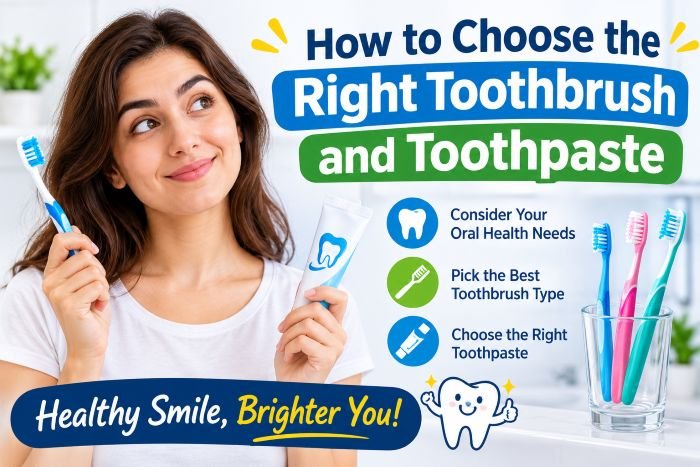
The oral care aisle is crowded with promises: whitening, sensitivity relief, charcoal, herbal, “360-degree clean.” It’s hard to know what matters. The good news is that choosing well comes down to a few simple principles.
Choosing a toothbrush
Bristles: soft is best for most people
Soft bristles clean effectively without damaging gums or enamel. Medium and hard bristles can cause gum recession and wear, especially if you brush hard. Most dentists recommend soft.
Head size: small enough to reach the back
A smaller head reaches back teeth and tight spots more easily.
Manual or electric?
Both work well when used properly. Electric brushes can help people who brush too hard, have limited dexterity or wear braces. Many include timers and pressure sensors.
| Feature | Manual brush | Electric brush |
|---|---|---|
| Cost | Low | Higher upfront, plus heads |
| Effectiveness | Good with proper technique | Often easier to use well |
| Built-in timer | No | Usually |
| Pressure alert | No | On many models |
| Best for | Most people | Heavy brushers, braces, limited dexterity |
Replace it every three months
Or sooner if bristles are frayed, and after an illness.
Choosing a toothpaste
Fluoride is the key ingredient
Fluoride strengthens enamel and helps prevent cavities. For most people, a fluoride toothpaste is the single most important choice.
Match it to your needs
- Sensitive teeth: look for toothpastes designed for sensitivity, used consistently for a few weeks.
- Gum health: some formulas target plaque and gum inflammation.
- Whitening: remove surface stains but don’t change natural tooth colour; very abrasive ones may wear enamel over time.
- Children: use age-appropriate fluoride amounts.
About charcoal and herbal toothpastes
Some charcoal products can be abrasive, and many lack fluoride. Herbal toothpastes may be pleasant to use, but check whether they contain fluoride. Ask your dentist if you’re unsure.
How much toothpaste?
Adults need only a pea-sized amount. More foam doesn’t mean a better clean.
Technique matters more than products
- Brush twice a day for two minutes.
- Angle the brush about 45 degrees towards the gumline.
- Use gentle, short strokes or small circles.
- Clean outer, inner and chewing surfaces.
- Spit after brushing, but avoid rinsing heavily with water so fluoride stays on teeth.
- Clean between teeth daily with floss or interdental brushes.
For a simple full routine, see these simple everyday tips for teeth and gums.
Frequently asked questions
Is an expensive toothbrush better?
Not necessarily. A soft, well-designed manual brush used correctly is very effective.
Should I use mouthwash after brushing?
If you use one, consider a different time of day so you don’t rinse away toothpaste fluoride immediately.
Can I use the same toothpaste as my child?
Adults can, but children need age-appropriate amounts of fluoride. Follow guidance for their age.
Final thoughts
A soft-bristled brush, a fluoride toothpaste and good technique matter far more than fancy claims. Keep it simple, be consistent and see your dentist regularly.
This article is general information and not dental advice.